Letter sizes and the same numbered size can fit differently across brands and cuts. An online size chart is useful, but it needs context: some charts describe body measurements, while others describe the finished garment. Read the chart’s instructions and compare like with like. A few notes from clothes you already own can make future decisions much easier.
01. Read what the chart measures
Find out whether the chart gives body measurements or garment measurements, and whether the units are inches or centimeters. Check for separate petite, tall, or other fit ranges. If the page does not make the distinction clear, ask the retailer before ordering.
Do not compare a garment laid flat directly to a body circumference. Follow the retailer’s measurement method and account for whether a flat width needs to be doubled.
02. Use a piece you like as a reference
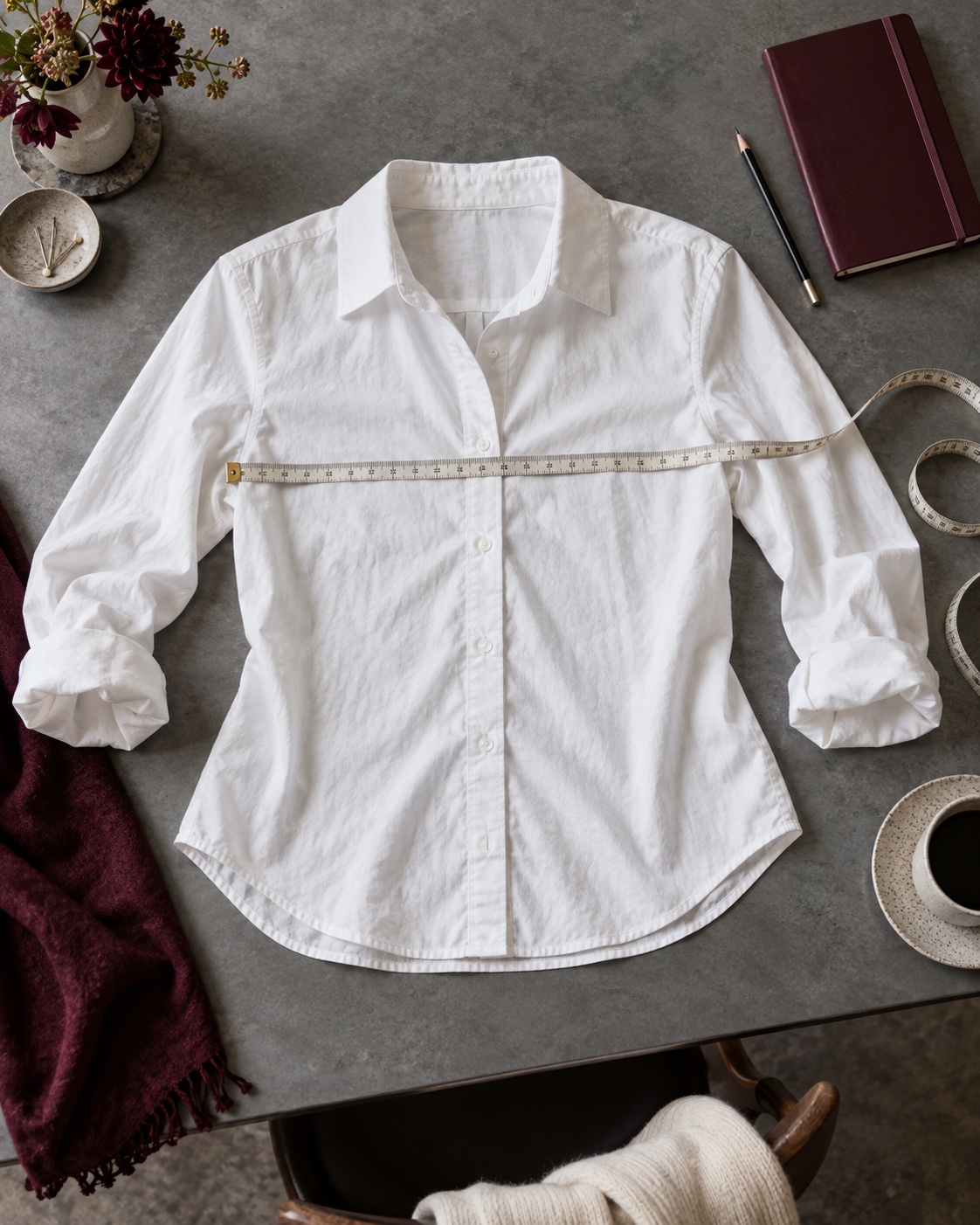
Choose a similar item from your closet that fits the way you want. Lay it flat without stretching and note the measurements relevant to that item: waistband width, rise, and inseam for trousers; chest width, body length, and sleeve length for a shirt.
Record how you measured it. Measurements are most useful when taken consistently. A relaxed woven shirt is a better comparison for another relaxed woven shirt than a fitted stretch top would be.
03. Check cut, fabric, and movement
Read the fabric composition and the description of the cut. Stretch content can affect movement, but it does not guarantee a particular feel or amount of give. A fitted cut, relaxed cut, and oversized cut are intended to sit differently.
Look for more than one product angle and details such as lining, closures, elastic panels, and adjustable straps. A model’s height and wearing size may add context, but your own measurements remain the more personal reference.
04. Treat reviews as clues
Reviews can reveal repeated questions about length or fabric, but they are individual experiences. Look for specific measurements and descriptions rather than relying only on “true to size.” A reviewer may prefer a different fit from yours.
If you are between sizes, identify which measurement matters most for the garment and ask the retailer for help if needed. Sizing up is not automatically the right answer; the shape and intended fit matter too.
05. Try it as a complete outfit
When the item arrives, test it with the shoes, layers, and undergarments you intend to wear. Sit, reach, and walk. Check seams, closures, and coverage in daylight. Follow the retailer’s conditions for trying on and returning items.
Keep a simple note of the brand, style, size, and what worked. This builds a personal reference over time without assuming every future item from the same brand will fit identically.
THE NOTE TO KEEP
Compare the same kind of measurement, in the same units, using the retailer’s instructions.
EXPLORE THE PIECES
The shopping edit.
A starting point for browsing, with fit and availability to check at each retailer. These are styling suggestions, not hands-on product reviews.
Some shopping links are affiliate links. We may earn a commission if you buy through them. Read our disclosure.
01Lulus
The everyday trouser
An easy foundation for shirts and cardigans. Choose your preferred width and length.
Browse at LulusLILYSILK
The fluid silk shirt
An oversized silk shirt to pair with denim, tailored trousers, or a simple skirt.
View at LILYSILKAmazon
Your denim starting point
Compare everyday denim options by measurements, rise, fabric, and your preferred fit.
Browse at Amazon