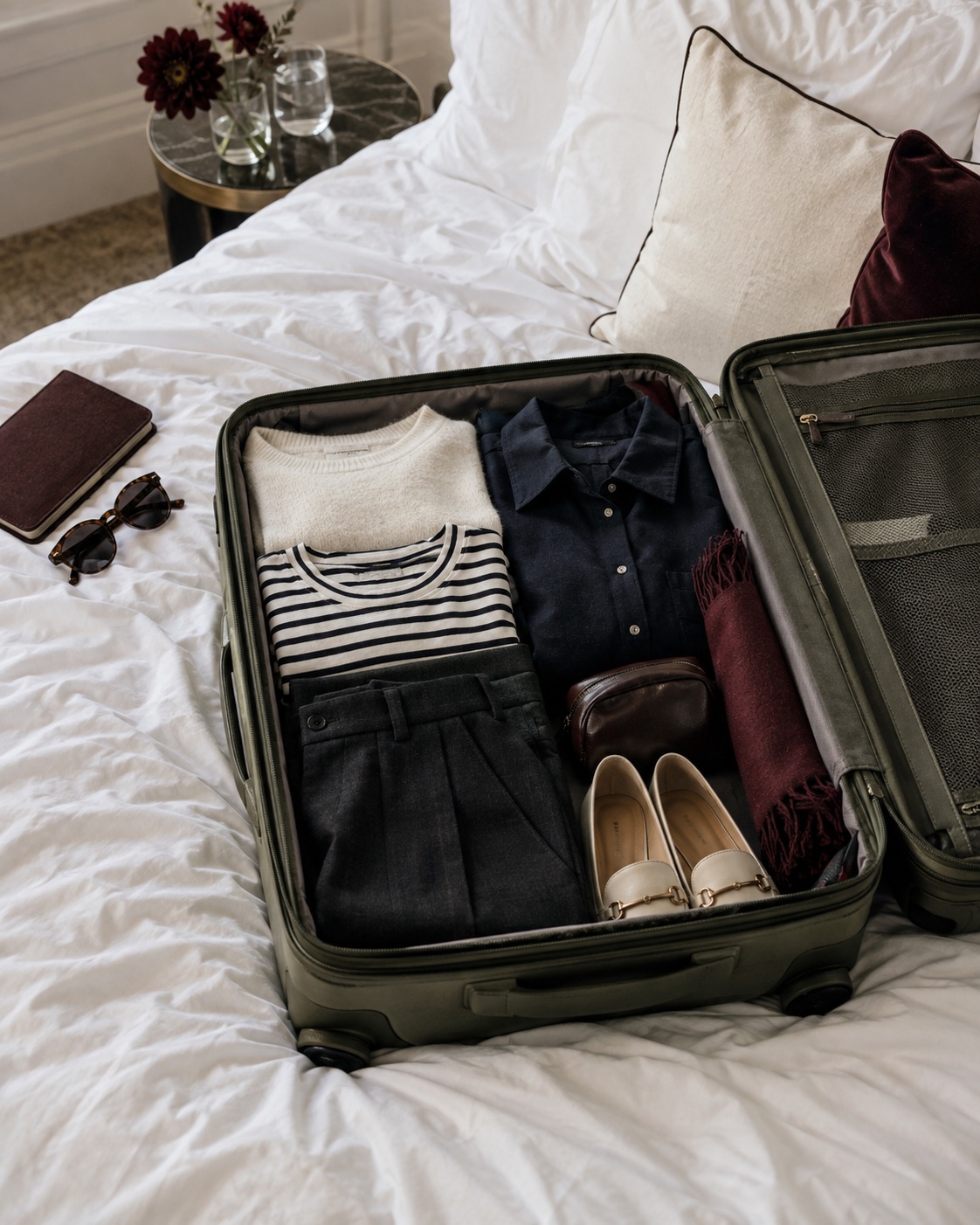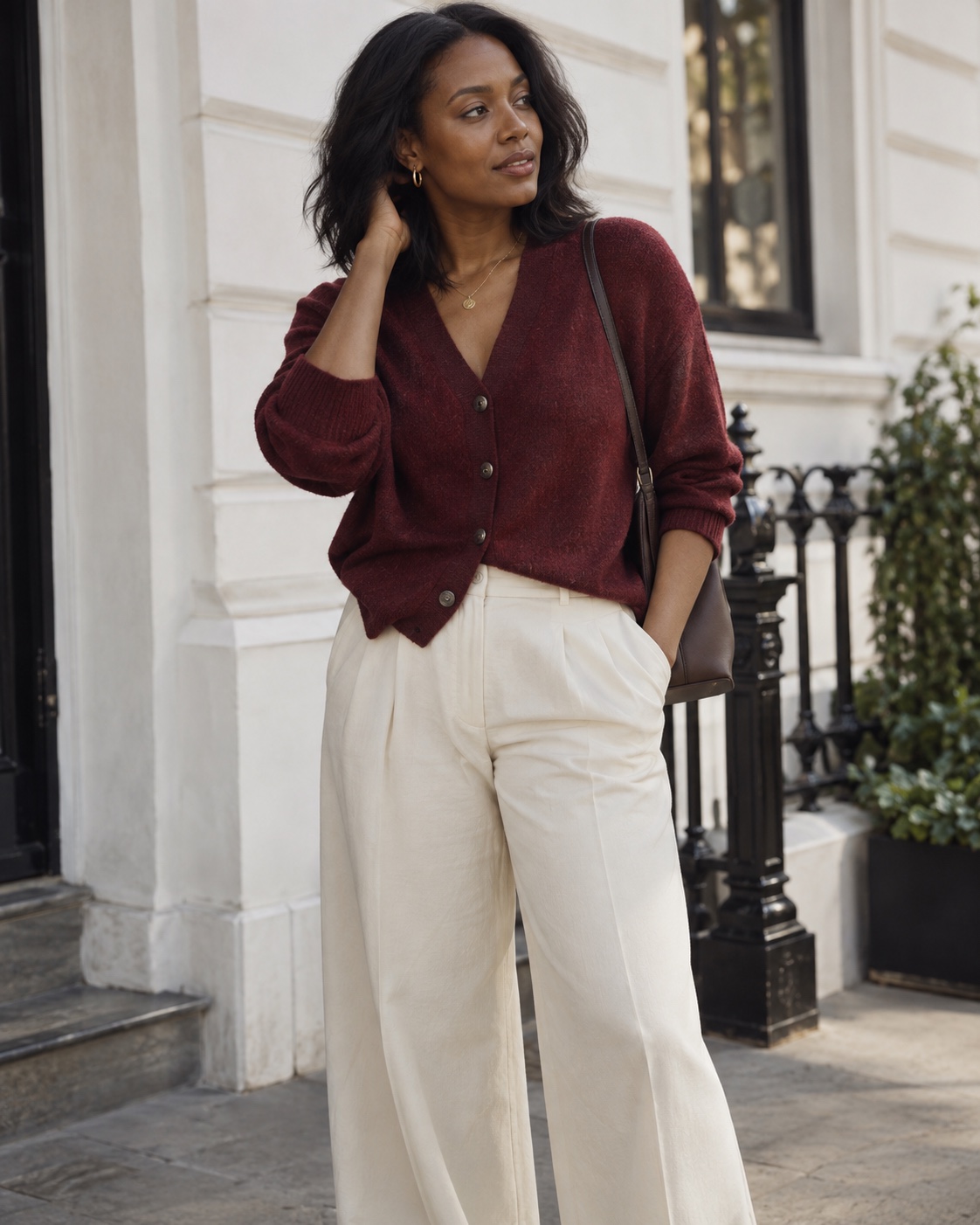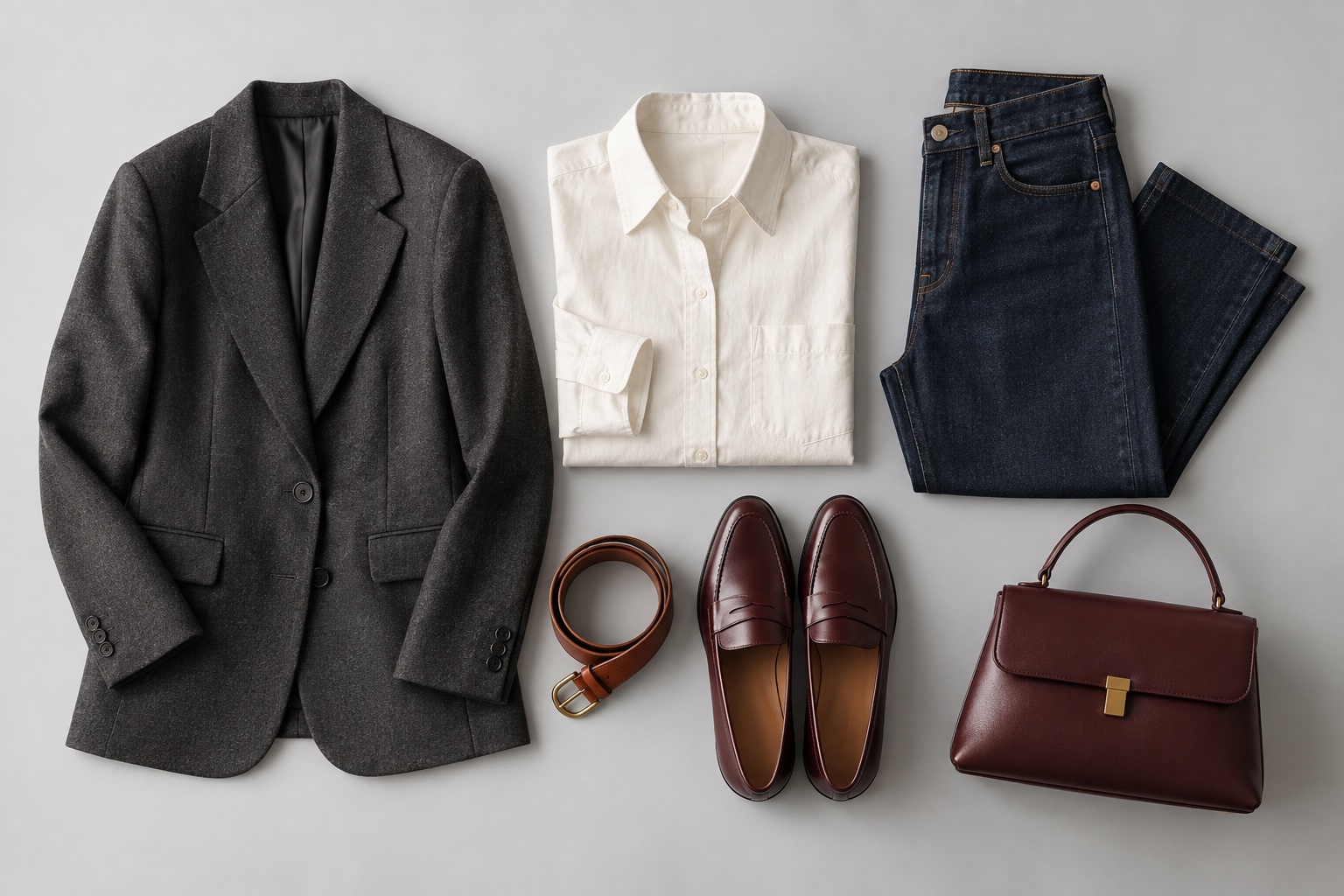
A capsule wardrobe is a small group of pieces that work well together. It does not need to be an exact number, a strict color scheme, or an excuse to replace everything you own. Start with the week you actually have: your commute, your climate, the places you go, and how often you do laundry. This ten-piece outline is a planning tool, not a required shopping list.
01. Begin with a week, not a wish list
Write down the outfits you need over a normal seven days. If most days are casual, your capsule should reflect that. If your office requires formal clothing, give work separates more space. Include footwear and a weather-appropriate outer layer; beautiful combinations are less useful when they do not work outside.
Lay out the pieces you already reach for. These are your anchors. Notice their colors, fabrics, and silhouettes before deciding that anything is missing.
02. Choose ten flexible building blocks
Use this starting list and substitute freely. A dress can replace a skirt; a second trouser can replace jeans. The coat should suit your actual local weather rather than the idea of fall in a photograph.
- A comfortable everyday tee
- An ivory or white shirt
- A fine knit or cardigan
- A blazer or relaxed jacket
- A weather-appropriate coat
- Straight-leg jeans
- An easy tailored trouser
- A midi skirt or versatile dress
- An everyday flat, loafer, or sneaker
- A second pair of shoes for a different need
03. Give the colors a little structure
Choose two foundation colors you like wearing together, such as charcoal and indigo, then add a lighter shade and one accent. Burgundy is an option, not a rule. If your existing wardrobe leans toward bright colors, build around those instead.
Make sure each new piece connects to the others through at least one element: color, shape, texture, or occasion. This is more useful than making every garment perfectly match.
04. Try the combinations on
Create five complete outfits, including shoes, before calling the capsule finished. Sit, walk, and lift your arms. Check that the shirt fits under the knit and that the jacket fits over both. Two pieces can look right together on a hanger and still feel awkward when layered.
Take quick reference photos and repeat the combinations over a week. Pay attention to what you avoid wearing. A difficult care routine, uncomfortable waistband, or wrong shoe can matter more than a missing trend piece.
05. Add only what solves a repeat problem
Keep a short list of gaps after your trial week. If one item would complete several comfortable outfits, it may be worth considering. If it only works with other things you have not bought yet, leave it on the list. A useful capsule should reduce decisions, including shopping decisions.
THE NOTE TO KEEP
Build five outfits from your closet first. Let real gaps, not an arbitrary item count, guide what comes next.
EXPLORE THE PIECES
The shopping edit.
A starting point for browsing, with fit and availability to check at each retailer. These are styling suggestions, not hands-on product reviews.
Some shopping links are affiliate links. We may earn a commission if you buy through them. Read our disclosure.
01LILYSILK
The fluid silk shirt
An oversized silk shirt to pair with denim, tailored trousers, or a simple skirt.
View at LILYSILKREVOLVE
The relaxed blazer
A little structure for denim days, office layers, and everything in between.
Browse at REVOLVELulus
The easy cardigan
A soft layer to wear buttoned with trousers or open over your favorite tee.
Browse at LulusAmazon
Your denim starting point
Compare everyday denim options by measurements, rise, fabric, and your preferred fit.
Browse at Amazon